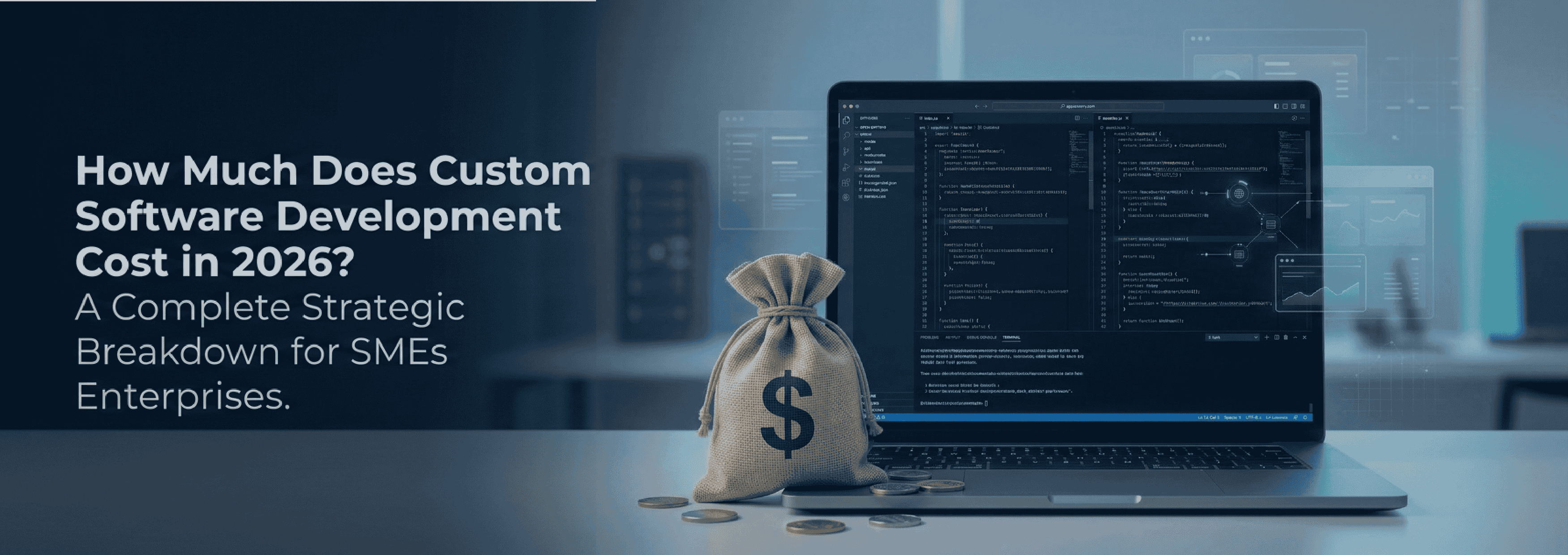
How Much Does Custom Software Actually Cost? A Realistic Breakdown for SMEs

( Summary : ) In 2026, custom software development typically costs between $25,000 and $500,000+, depending on complexity, feature scope, security requirements, and scalability planning. Most SME projects fall between $75,000 and $200,000. Annual maintenance usually adds 15–25% of the initial build cost. The primary cost drivers are project complexity, architecture, development team expertise, integrations, and compliance requirements.

How Much Does Custom Software Actually Cost? A Realistic Breakdown for SMEs

If you're searching for custom software development cost, you're already preparing a serious capital-allocation decision. This isn't casual research. It's strategic planning that will shape your operational efficiency, revenue potential, customer experience, and competitive edge for years to come.

Custom software has evolved from a luxury to essential operational infrastructure for SMEs and scaling enterprises.

It replaces fragmented tools, manual processes, and generic SaaS limitations with tailored solutions that automate workflows, unlock data insights, ensure compliance, and scale seamlessly with growth.

In 2026, businesses that invest wisely in custom solutions often see 20–40% gains in productivity and significant reductions in long-term operational costs.

So, let's answer the core question with 2026 data.

What Is The Cost Of Custom Software Development In 2026?

According to the GoodFirms 2026 Custom Software Development Cost Survey and benchmarks from leading agencies, typical ranges are:

  • Small-scale / MVP / Internal tools

    $25,000 – $75,000 (basic automation dashboards, simple CRMs, inventory systems, or proof-of-concept apps)

  • Mid-level business platforms

    $75,000 – $200,000 (multi-user SaaS features, e-commerce backends, integrated analytics, role-based systems)

  • Enterprise-grade or complex systems

    $200,000 – $500,000+ (AI-powered platforms, multi-module ERPs, compliance tools, high-concurrency marketplaces)

Most SME and growth-stage projects (66% of surveyed companies) fall in the $30,000–$100,000 band for core builds, with AI-enhanced versions pushing small-to-mid projects to $50,000–$125,000. Average project cost across the industry sits around $132,000, with timelines of 4–13 months depending on complexity.

These are not arbitrary numbers, they reflect real 2026 market realities shaped by inflation in talent costs, cloud infrastructure, AI integration, and rising compliance demands.

However, the smarter leadership question remains: What is the true cost of NOT building it?

Manual processes, SaaS subscription creep, integration headaches, data silos, and lost productivity frequently exceed the investment in a well-built custom solution within 18–36 months.

One mid-sized logistics firm, for example, spent $180,000 on custom route-optimization software and recouped it in 14 months through 28% fuel savings and 35% faster deliveries, while their previous SaaS stack was costing $4,200/month with limited customization.

Custom Software Development Cost Breakdown (2026 Edition)

A transparent breakdown helps you allocate budgets confidently and avoid surprises. Here's how costs typically distribute in a $150,000 mid-sized project (based on 2026 industry benchmarks):

  • Development (frontend + backend) : 40–50% ($60,000–$75,000)

  • Quality Assurance & Testing : 15–25% ($22,500–$37,500)

  • UI/UX Design : 10–20% ($15,000–$30,000)

  • Project Management & Discovery : 10–15% ($15,000–$22,500)

  • DevOps, Infrastructure & Architecture : 5–10% ($7,500–$15,000)

Now let's examine each driver in detail.

1. Project Scope And Complexity

Scope remains the #1 cost driver (cited by 95.3% of companies). A simple internal dashboard with 3–5 users and basic reporting might take 400–600 hours. A multi-tenant SaaS platform with user roles, billing, analytics, and third-party integrations can require 1,500–3,000+ hours.

Complexity multipliers include:

  • Number of user roles and permission levels
  • Data volume and real-time processing needs
  • Regulatory compliance (GDPR, HIPAA, SOC 2, PCI-DSS)
  • Scalability requirements (from 100 to 100,000+ users)
  • Multi-platform support (web + iOS + Android + desktop)

Pro tip from Divyal Technologies for SMEs:

Start with a clearly defined Minimum Viable Product (MVP). Launch core features first, measure real usage, then iterate. This approach routinely saves 30–40% versus building everything upfront.

2. Feature Depth And Functional Requirements

Every feature adds hours, testing, and maintenance. High-impact features that drive cost but also ROI include:

  • Payment gateway + subscription management
  • Advanced analytics dashboards with AI insights
  • Role-based access control (RBAC) and audit logs
  • Real-time notifications and collaboration tools
  • API integrations with existing ERP/CRM/accounting systems
  • AI/ML modules (chatbots, predictive analytics, image recognition)
  • Mobile synchronization and offline capabilities

Strategic advice from Divyal Technologies:

Use MoSCoW prioritization (Must-have, Should-have, Could-have, Won't-have). Tie every feature to a measurable business outcome: revenue increase, cost reduction, or efficiency gain.

3. Development Team Composition And Hourly Rates

Team structure heavily influences pricing. A typical professional team includes:

  • 1 Project Manager / Scrum Master
  • 1–2 UI/UX Designers
  • 2–4 Frontend Engineers (React, Vue, Angular)
  • 2–4 Backend Engineers (Node.js, Python/Django, .NET, Java, Laravel)
  • 1–3 QA Engineers (manual + automated testing)
  • 1 DevOps/Cloud Architect (AWS, Azure, GCP)

2026 Global Hourly Rates (blended averages):

  • North America: Junior $55–$100 | Mid $90–$149 | Senior/Architect $125–$250+
  • Western Europe: Junior $50–$80 | Mid $65–$95 | Senior $95–$165
  • Eastern Europe: Junior $30–$55 | Mid $40–$80 | Senior $60–$120
  • Asia (India, Vietnam, Philippines): Junior $20–$30 | Mid $25–$40 | Senior $30–$55

For SMEs, hybrid or dedicated offshore custom development teams often reduce total project cost by 40–60% while maintaining quality.

4. Architecture And Technology Stack Choices

Modern scalable architecture (microservices, serverless, cloud-native) adds 10–20% upfront but prevents expensive rewrites later. Popular 2026 stacks:

  • Frontend: React/Next.js or Vue/Nuxt
  • Backend: Node.js, Python (FastAPI/Django), .NET 8, or Java Spring Boot
  • Database: PostgreSQL, MongoDB, or cloud-managed (Aurora, Cosmos DB)
  • Cloud: AWS, Azure, or Google Cloud with Kubernetes
  • Additional: AI via OpenAI/Anthropic APIs, real-time with WebSockets/Socket.io

Decisions must align with your 3–5 year growth projections, data sensitivity, and integration roadmap.

5. UI/UX Design Investment

Design typically accounts for 10–20% of budget but dramatically impacts adoption. Poor UX leads to higher support tickets, lower productivity, and abandoned features.

In 2026, expectations include responsive design, accessibility (WCAG 2.2), dark mode, and intuitive micro-interactions. Investing here reduces training time by 40–60% and boosts user satisfaction scores.

6. Testing, Security, And Compliance

QA and security represent 15–25% of effort and are non-negotiable. This covers unit/integration testing, performance/load testing, penetration testing, and automated regression suites.

For fintech or healthcare projects, add security audits and compliance certifications, often $10,000–$50,000 extra but essential for risk mitigation. System downtime or a breach can cost far more than the build itself.

7. Maintenance, Support, And Total Cost Of Ownership (TCO)

Annual maintenance typically runs 15–25% of initial development cost. For a $150,000 system, expect $22,500–$37,500/year covering:

  • Security patches and updates
  • Cloud infrastructure scaling
  • Bug fixes and performance optimization
  • Minor feature enhancements
  • User support and training

Over 3–5 years, TCO often equals or exceeds the initial build. Factor this in during budgeting many leaders use a 5-year spreadsheet to compare options.

Hidden Costs In Custom Software Development (Often Overlooked In 2026)

High-intent decision-makers frequently discover these:

  • Data migration from legacy systems ($5,000–$30,000+)
  • Third-party API and licensing fees (Stripe, Twilio, OpenAI, Google Maps can add $1,000–$10,000/year)
  • Cloud hosting and scaling ($500–$10,000+/month for larger apps)
  • Compliance certifications and legal reviews
  • Change requests and scope creep (adds 10–25% if requirements aren't locked early)
  • Team training and change management ($2,000–$15,000)
  • Post-launch monitoring tools and incident response

Smart budgeting includes a 20–30% contingency fund.

Custom Software Vs SaaS: Long-Term Cost Comparison (2026 Perspective)

Short-term: SaaS wins on speed and low upfront cost (often $50–$500/user/month).

Long-term (3–5 years): Custom software frequently delivers superior ROI for businesses with unique processes. Recurring SaaS fees + per-user pricing + add-ons + customization limits + integration work can total more than a one-time custom build plus maintenance.

Key Advantages Of Custom Software

  • Complete data ownership and no vendor lock-in
  • Unlimited scalability and performance tuning
  • Exact workflow fit = higher employee adoption
  • Competitive differentiation
  • Easier integration with existing systems

Example ROI scenario:

A manufacturing SME spending $6,000/month across 4 SaaS tools ($72,000/year) switched to custom software for $120,000 initial + $25,000/year maintenance. Break-even in ~22 months, then $47,000+ annual savings plus productivity gains.

Regional Cost Variations And Outsourcing Strategies For SMEs

In 2026, location matters hugely:

  • North America/Western Europe builds: Premium quality, higher cost
  • Eastern Europe: Excellent balance of quality and price
  • Asia (especially India): Most cost-effective for well-defined projects, massive talent pool

Many SMEs achieve 40–60% savings with dedicated teams in India with the same quality of work as US and Europe.

Emerging Trends Impacting Costs In 2026

  • AI Integration

    91% of companies now use AI for coding, testing, and planning. It can reduce development hours by 10–25% but adds complexity and API costs if not planned.

  • Cloud-Native & Serverless

    Higher initial architecture cost, lower ongoing hosting.

  • Low-Code/No-Code Foundations

    Accelerate MVPs but may require custom extensions later.

  • Security & Privacy by design

    Madatory for most sector, adds upfront cost but prevents expensive fixes

Step-By-Step Guide: How To Budget And Procure Your Custom Software Project

  1. Define business goals and success metrics (ROI targets).
  2. Conduct a 2–4 week Discovery phase ($5,000–$15,000) for detailed requirements and architecture.
  3. Prioritize features and create user stories.
  4. Request proposals from 3–5 vetted partners like Divyal Technologies (include fixed-price vs time & material options).
  5. Evaluate not just cost but methodology, portfolio, and communication fit.
  6. Build in milestones, acceptance criteria, and 20% contingency.
  7. Plan for phased delivery and post-launch support contract.

Common Pitfalls SMEs Should Avoid

  • Undefined or constantly changing requirements
  • Choosing the cheapest vendor without checking references
  • Ignoring TCO and maintenance
  • Underestimating integration and data migration effort
  • Skipping proper discovery and architecture planning

Executive Summary: How Much Does Custom Software Development Cost?

Custom software development costs in 2026 typically range from $25,000 for focused MVPs to $500,000+ for enterprise platforms, with the majority of SME projects landing between $75,000 and $200,000. Primary cost drivers include complexity, features, team expertise, architecture, security, and scalability needs.

When evaluated strategically, not as an expense but as a long-term operational asset, custom software delivers unmatched ownership, efficiency, and competitive advantage. For leadership teams serious about automation, data-driven decisions, and sustainable growth, the real question isn't 'How much does it cost?' but 'How much value will we create and how quickly?'

If you are ready to move forward, you can schedule a free call with our experts at Divyal Technologies.

It's the highest-ROI investment you can make. The businesses that act decisively in 2026 will be the ones dominating their markets in 2030.

Book a free call today!!

More Blogs

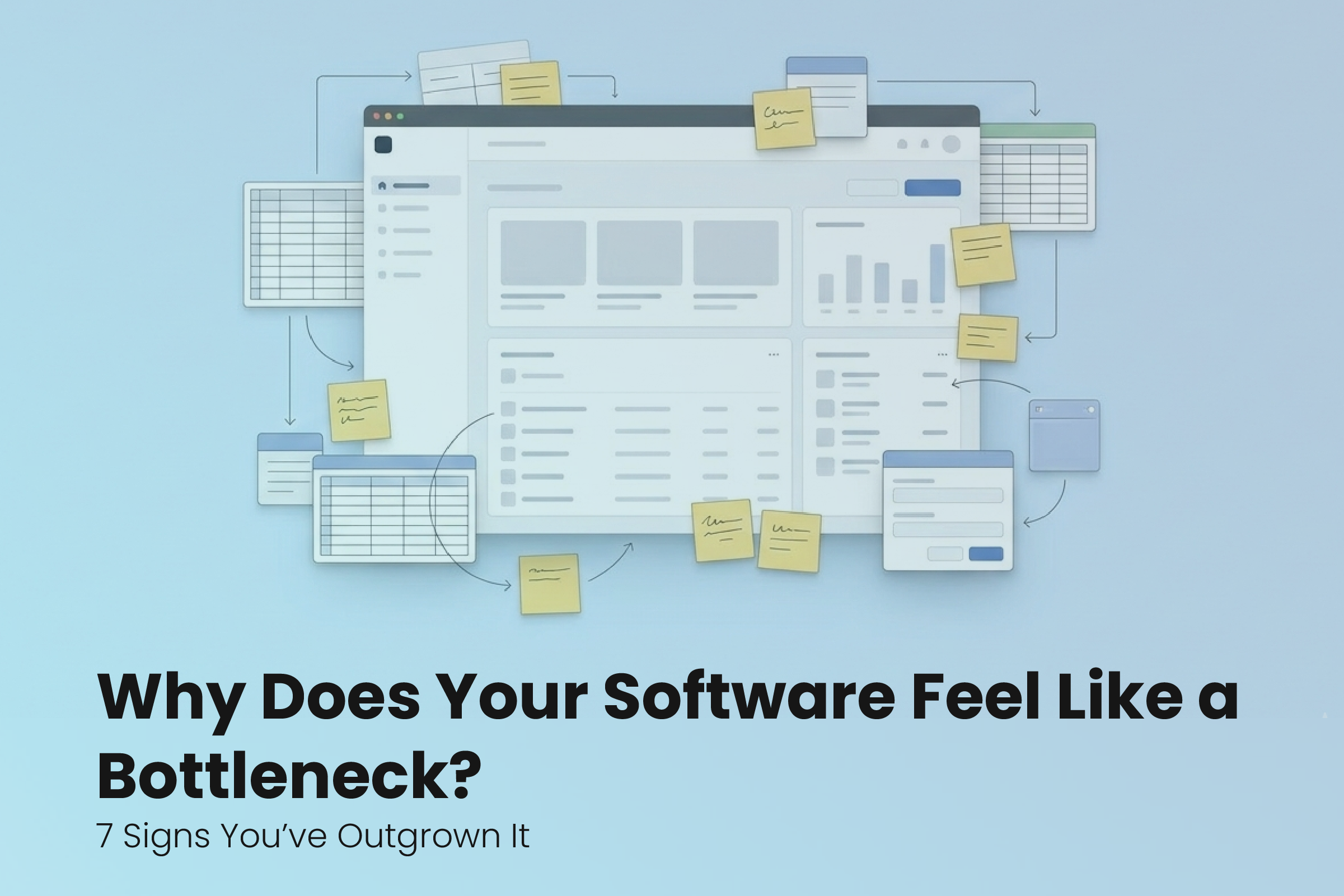
7 Signs We Found That Indicate Your Business Has Outgrown Off-the-Shelf Software

7 Signs We Found That Indicate Your Business Has Outgrown Off-the-Shelf Software

A business has outgrown off-the-shelf software when its workflows, reporting needs, and operational complexity no longer fit within generic tools. Common signs include manual data transfers between systems, reliance on spreadsheets or shadow processes, rising software costs without productivity gains, and vendor limitations blocking growth. When teams spend more time working around software than using it effectively, it signals a misalignment between technology and business needs. At this stage, custom software development becomes necessary to centralize data, automate complex processes, and support scalable growth.

Read More

What to Look for in a Custom Software Development Partner (And Red Flags to Avoid)

What to Look for in a Custom Software Development Partner (And Red Flags to Avoid)

Choosing the right custom software development partner in 2026 requires evaluating industry experience, technical expertise, development process, communication, security practices, pricing transparency, and long-term support. The best partners demonstrate proven results through case studies, follow structured Agile development processes, prioritize security and compliance, and provide scalable teams with modern tech stacks such as cloud platforms, AI/ML, microservices, and DevOps. Avoid vendors with vague portfolios, unrealistic pricing, poor communication, or weak intellectual property protections.

Read More
Is Your Business Actually Ready for AI? A 10-Point Assessment

Is Your Business Actually Ready for AI? A 10-Point Assessment

Artificial Intelligence (AI) enables businesses to automate tasks, analyze large volumes of data, and make faster, smarter decisions. However, AI delivers real value only when a business is prepared for it. Being “AI-ready” means having clear objectives, structured and accessible data, defined processes, and the right technology infrastructure in place

Read More