Our Blogs

From strategy to deployment, we build scalable solutions.

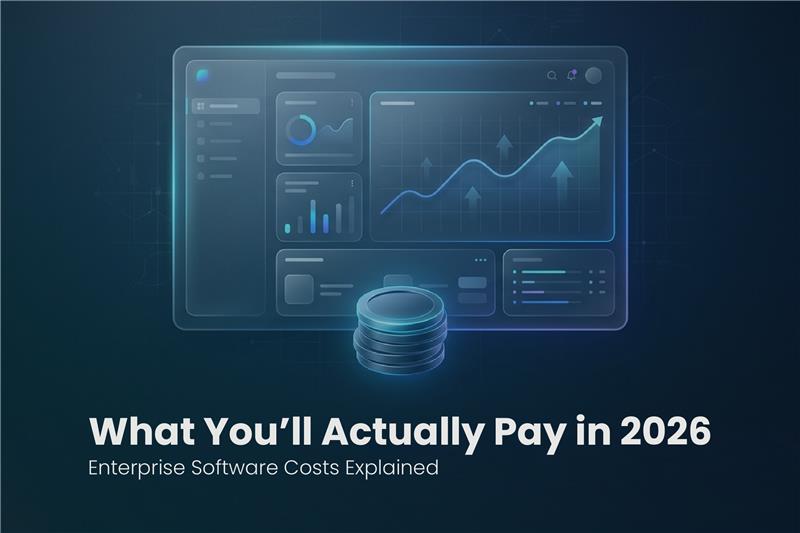
How Much Does Custom Software Actually Cost? A Realistic Breakdown for SMEs

How Much Does Custom Software Actually Cost? A Realistic Breakdown for SMEs

In 2026, custom software development typically costs between $25,000 and $500,000+, depending on complexity, feature scope, security requirements, and scalability planning. Most SME projects fall between $75,000 and $200,000. Annual maintenance usually adds 15–25% of the initial build cost. The primary cost drivers are project complexity, architecture, development team expertise, integrations, and compliance requirements.

Read More
7 Signs We Found That Indicate Your Business Has Outgrown Off-the-Shelf Software

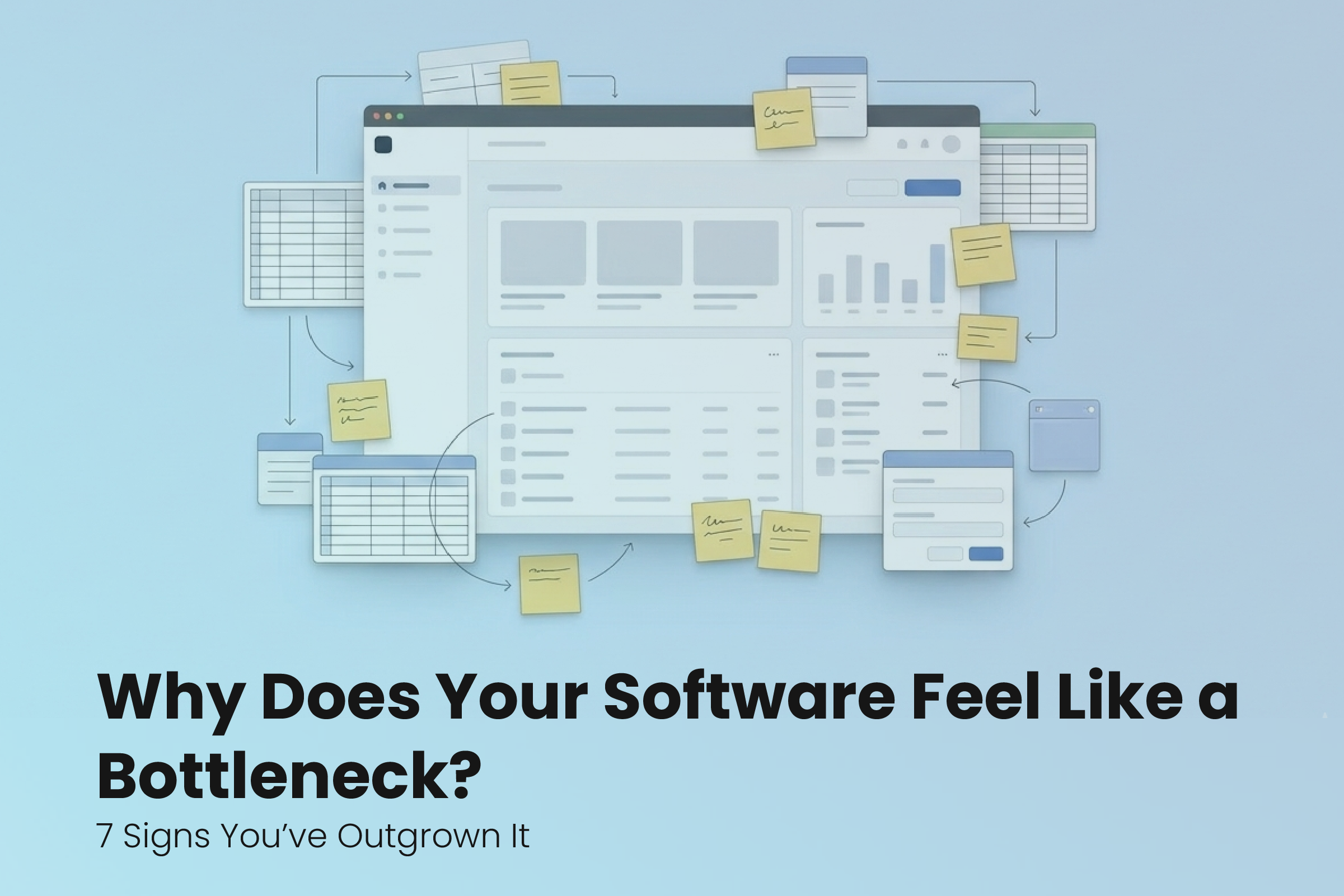
7 Signs We Found That Indicate Your Business Has Outgrown Off-the-Shelf Software

A business has outgrown off-the-shelf software when its workflows, reporting needs, and operational complexity no longer fit within generic tools. Common signs include manual data transfers between systems, reliance on spreadsheets or shadow processes, rising software costs without productivity gains, and vendor limitations blocking growth. When teams spend more time working around software than using it effectively, it signals a misalignment between technology and business needs. At this stage, custom software development becomes necessary to centralize data, automate complex processes, and support scalable growth.

Read More
What to Look for in a Custom Software Development Partner (And Red Flags to Avoid)

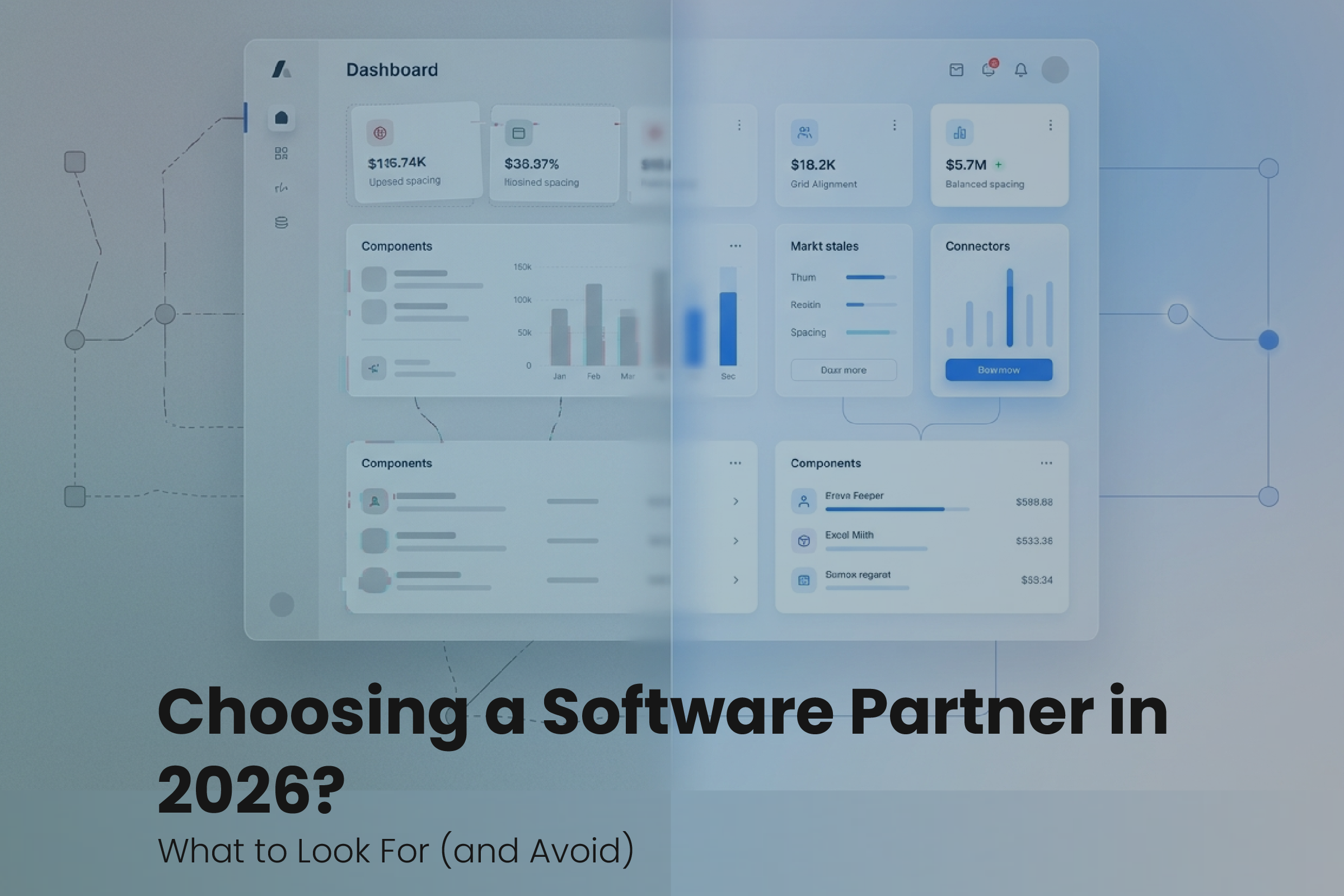
What to Look for in a Custom Software Development Partner (And Red Flags to Avoid)

Choosing the right custom software development partner in 2026 requires evaluating industry experience, technical expertise, development process, communication, security practices, pricing transparency, and long-term support. The best partners demonstrate proven results through case studies, follow structured Agile development processes, prioritize security and compliance, and provide scalable teams with modern tech stacks such as cloud platforms, AI/ML, microservices, and DevOps. Avoid vendors with vague portfolios, unrealistic pricing, poor communication, or weak intellectual property protections.

Read More
Is Your Business Actually Ready for AI? A 10-Point Assessment

Is Your Business Actually Ready for AI? A 10-Point Assessment

Artificial Intelligence (AI) enables businesses to automate tasks, analyze large volumes of data, and make faster, smarter decisions. However, AI delivers real value only when a business is prepared for it. Being “AI-ready” means having clear objectives, structured and accessible data, defined processes, and the right technology infrastructure in place

Read More
The Complete Guide to Offshore Software Development in 2026 (What Most Companies Get Wrong)

The Complete Guide to Offshore Software Development in 2026 (What Most Companies Get Wrong)

Offshore development in 2026 is no longer just about cost, it is about accessing global talent, scaling faster, and building efficiently. Success depends on choosing the right engagement model and the right partner, while aligning with regions that match your needs. The biggest risks include communication gaps, quality issues, and security concerns, but these can be managed with clear documentation, strong processes, and consistent collaboration. Ultimately, companies that focus on long-term value rather than just the lowest hourly rate see the best results

Read More
React vs Flutter for Your Startup in 2026

React vs Flutter for Your Startup in 2026

React vs Flutter in 2026 is a strategic choice that impacts your startup’s speed, cost, hiring, and scalability. React Native is often the safer choice for early-stage startups due to faster development, easier hiring, and a strong ecosystem, making it ideal for MVPs and web-connected products. Flutter, on the other hand, excels in performance, UI consistency, and multi-platform scalability, making it better suited for design-heavy and mobile-first applications. While Flutter has an edge in high-performance scenarios, React Native is sufficient for most use cases. Ultimately, the right choice depends on your team’s expertise, product goals, and long-term vision, with execution and speed mattering more than the framework itself.

Read More
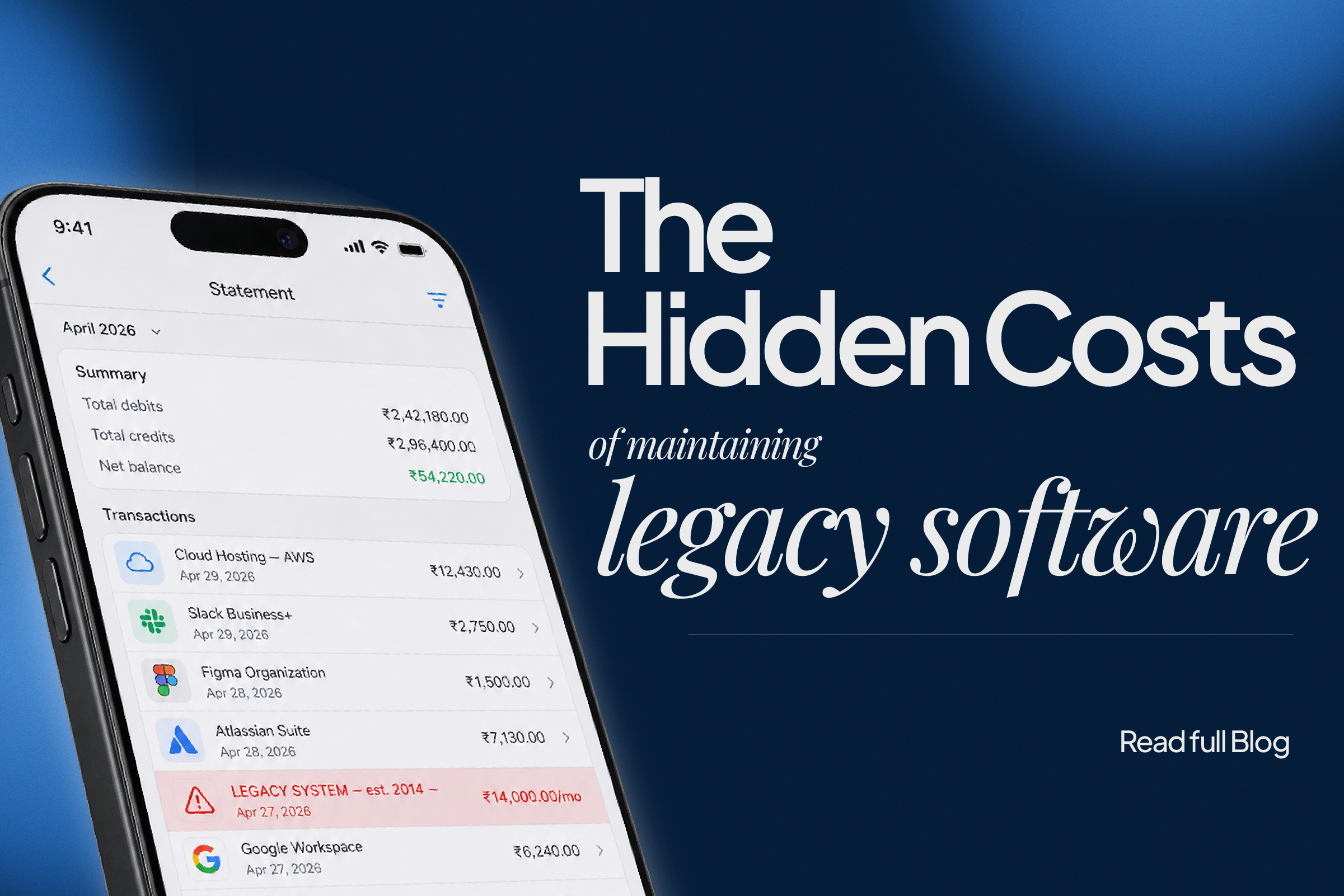
The Hidden Costs of Maintaining Legacy Software (And When to Modernize)

The Hidden Costs of Maintaining Legacy Software (And When to Modernize)

Legacy software often appears cost-effective on the surface, but hidden operational, security, and innovation costs can significantly increase the true total cost of ownership over time. Businesses relying on outdated systems frequently experience lower productivity, rising maintenance expenses, integration challenges, compliance risks, and difficulty adopting modern technologies such as AI and cloud platforms. Understanding these hidden costs helps organizations make informed modernization decisions before technical debt becomes a major competitive disadvantage.

Read More